


Norwood-Hamilton-skalaen
Få indsigt i, hvilket stadie af hårtab du befinder dig i ved hjælp af Norwood-Hamilton-skalaen, og find ud af, hvilke behandlingsmuligheder der passer bedst til dig.
Fremhævet i:

Hårtab kan være en udfordrende oplevelse, men at vide, hvor du befinder dig på Norwood-Hamilton-skalaen, kan gøre hele forskellen. Uanset om du bemærker en svag ændring i din hårgrænse eller kæmper med mere fremskredet tyndere hår, giver denne skala en klar oversigt over, hvordan du kan identificere dit stadie af hårtab og undersøge de mest effektive behandlingsmuligheder. Hvis du overvejer en hårtransplantation i Tyrkiet, er kendskab til dit stadie det første skridt mod at træffe velinformerede beslutninger og opnå de bedst mulige resultater.
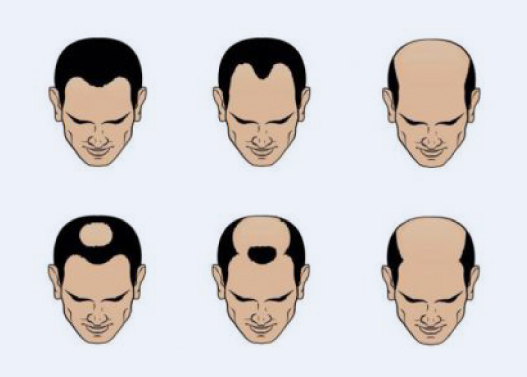
What is Norwood-Hamilton Scale?
Norwood-Hamilton-skalaen er et bredt anerkendt klassifikationssystem, der anvendes til at vurdere sværhedsgraden af mandlig skaldethed. Skalaen, der oprindeligt blev udviklet af dr. James Hamilton i 1950’erne og senere videreudviklet af dr. O’Tar Norwood, inddeler hårtab i syv stadier, der spænder fra en fuld hårpragt til fremskreden skaldethed. Hvert stadium repræsenterer et forskelligt mønster og en forskellig grad af hårtab, hvilket hjælper både enkeltpersoner og sundhedspersonale med at vurdere hårtabsudviklingen nøjagtigt. Skalaen indeholder også en klasse A-variant, der fremhæver et mindre almindeligt, mere ensartet mønster af tilbageskridende hårgrænse.
At finde ud af, hvor du befinder dig på Norwood-Hamilton-skalaen, er et afgørende første skridt i fastlæggelsen af de mest passende behandlingsmuligheder, uanset om der er tale om forebyggende pleje, medicinsk behandling eller hårgenopretningsprocedurer.
Trinene i Norwood-Hamilton-skalaen
.blueslide .splide__slide .wp-block-group { background-color: #eaeffb; margin-right: 1em; border-radius: 25px; padding: 1em; text-align:left; min-height: 410px; } .blueslide h3 { font-size: 1.6em; font-weight: 600; }Vægttabskirurgi omfatter flere forskellige indgreb, der har til formål at hjælpe patienterne med at opnå en langsigtet vægtkontrol og et bedre helbred. De forskellige metoder virker på forskellig vis, og det rigtige valg afhænger af faktorer som BMI, livsstil og sygehistorie.
Fase 1:
Minimalt hårtab

Trin 1 på Norwood-Hamilton-skalaen svarer til en naturlig hårgrænse med minimalt eller intet synligt hårtab, hvilket ofte betragtes som en del af en normal, moden hårgrænse snarere end et tegn på mandlig skaldethed.
- Hårtab: Hårgrænsen ser normal ud med ringe eller ingen synlig tilbagetrækning.
- Behandlingsmuligheder: Fokusér på at bevare et sundt hår gennem en afbalanceret kost, stresshåndtering og skånsomme hårplejeprodukter. Forebyggende behandlinger som PRP-terapi (Platelet-Rich Plasma) eller specialshampoo kan også være gavnlige.
- Kvalifikationer til hårtransplantation: Anbefales normalt ikke. Der bør lægges vægt på forebyggelse frem for kirurgisk indgreb.
- Prognose: Fremragende muligheder for at bevare fuld hårtykkelse ved hjælp af tidlige, ikke-invasive behandlinger.
Fase 2:
Tilbagetrækning af hårgrænsen

I fase 2 begynder Norwood-Hamilton-skalaen at vise de første tegn på mandlig skaldethed, med en let tilbagetrækning ved tindingerne, der danner en svag »M«-form.
- Hårtab: Mærkbar, men mild tilbagetrækning ved tindingerne.
- Behandlingsmuligheder: Lokale behandlinger som minoxidil, orale lægemidler som finasterid og lavintensitetslaserterapi (LLLT) kan bidrage til at bremse hårtabet.
- Krav til hårtransplantation: Det er generelt ikke nødvendigt, men en mindre hårtransplantation kan være en mulighed for dem, der ønsker at genoprette hårgrænsen.
- Prognose: Med den rette behandling er det muligt at bevare og endda i nogen grad genoprette hårets tæthed.
Fase 3:
Tidligt hårtab

Trin 3 markerer det første markante stadie af hårtab på Norwood-Hamilton-skalaen, der er kendetegnet ved en mere markant tilbagetrækning ved tindingerne og en mulig begyndende udtynding på issen.
- Hårtab: Mere markant tilbageskridning ved tindingerne, med mulig udtynding på issen.
- Behandlingsmuligheder: En kombination af medicin, PRP-behandling samt overvejelse af kirurgiske muligheder såsom FUE-teknikken (Follicular Unit Extraction) eller DHI-teknikken (Direct Hair Implantation).
- Kvalifikationer til hårtransplantation: En oplagt kandidat til hårtransplantation, især hvis ikke-kirurgiske metoder ikke giver de ønskede resultater.
- Prognose: Høj succesrate med hensyn til at genskabe en naturlig hårgrænse og øge hårets tæthed.
Fase 4:
Avanceret hårtab ved hårgrænsen

I fase 4 udvikler hårtabet sig yderligere på Norwood-Hamilton-skalaen, med markant udtynding på issen og en betydelig tilbagetrækning af hårgrænsen.
- Hårtab: Markant tilbagetrækning af hårgrænsen og synlig udtynding på issen, med en tydelig afgrænsning mellem de to områder.
- Behandlingsmuligheder: En kombination af medicinsk behandling og en hårtransplantation, der kræver ca. 2.500–3.000 transplantater. Avancerede teknikker som Sapphire FUE kan give de bedste resultater.
- Kvalifikationskriterier for hårtransplantation: Den ideelle kandidat til kirurgisk indgreb, hvor der lægges vægt på strategisk placering af transplantaterne for at opnå et naturligt resultat.
- Prognose: Positive resultater med markant forbedring af hårvolumen og dækning.
Trin 5:
Omfattende hårtab

Trin 5 på Norwood-Hamilton-skalaen angiver, at de skaldede områder i panden og på issen smelter sammen, hvilket tyder på et mere omfattende hårtab.
- Hårtab: De skaldede områder foran og på issen begynder at smelte sammen og danner et stort skaldet område.
- Behandlingsmuligheder: Hårtransplantation med et større antal transplantater (3.000–4.000 transplantater) samt løbende medicinsk behandling til fremme af hårvæksten.
- Kvalifikationer til hårtransplantation: En god kandidat til hårtransplantation, forudsat at der er et sundt donorområde. Man kan også overveje mikropigmentering af hovedbunden (SMP) for at give håret et fyldigere udseende.
- Prognose: En vellykket restaurering er mulig, hvis man har realistiske forventninger til tætheden og dækningen.
Trin 6:
Alvorligt hårtab
I stadium 6 viser Norwood-Hamilton-skalaen et alvorligt hårtab, hvor der kun er en smal hårbånd tilbage langs siderne og bag på hovedet.
- Hårtab: Hårbåndet mellem panden og issen forsvinder, så der kun er et smalt bånd af hår tilbage langs siderne og bag på hovedet.
- Behandlingsmuligheder: En kombineret løsning bestående af en hårtransplantation med høj tæthed og SMP for at give håret et fyldigere udseende. Transplantation af kropshår kan være en mulighed, hvis der kun er begrænset donorhår på hovedbunden.
- Kvalifikation til hårtransplantation: Om du er egnet til behandlingen afhænger af donorområdets kvalitet. Der kan være behov for yderligere konsultationer for at vurdere, om behandlingen er mulig.
- Prognose: Det er muligt at genoprette håret, men det er ikke sikkert, at man kan opnå fuld dækning. Fokus ligger ofte på at skabe en illusion af tæthed.
Trin 7:
Fuldstændig skaldethed

Trin 7 er det sidste trin på Norwood-Hamilton-skalaen og betegner fremskreden skaldethed, hvor der kun er et tyndt, hesteskoformet hårbånd tilbage på siderne og bagsiden af hovedbunden.
- Hårtab: Der er kun meget lidt hår tilbage, typisk kun langs siderne og bag på hovedet i en tynd hesteskoform.
- Behandlingsmuligheder: Mikropigmentering af hovedbunden, parykker af medicinsk kvalitet eller eventuelt en hårtransplantation ved hjælp af kropshår, hvis det er muligt.
- Kvalifikation til hårtransplantation: Begrænset på grund af den begrænsede tilgængelighed af donorhår. Ikke-kirurgiske metoder kan være en mere praktisk løsning.
- Prognose: Der kan opnås kosmetiske forbedringer, men det er usandsynligt, at håret vil vokse helt ud igen.
Norwood klasse A:
Alternativt hårtabsmønster

Klasse A på Norwood-Hamilton-skalaen er kendetegnet ved et unikt mønster af hårtab, hvor den forreste hårgrænse trækker sig tilbage på en mere ensartet, lineær måde uden nævneværdig udtynding på issen.
- Hårtabsform: En mindre almindelig, jævn tilbagetrækning af den forreste hårgrænse uden nævneværdig udtynding på issen. Hårgrænsen trækker sig tilbage i et lige, lineært mønster.
- Behandlingsmuligheder: Målrettet hårtransplantation med fokus på den forreste hårgrænse, kombineret med medicinsk behandling for at bremse yderligere hårtab.
- Kvalifikationer til hårtransplantation: En fremragende kandidat til genopbygning af pandehår, især hvis donorhåret er kraftigt.
- Prognose: Generelt gode resultater med mulighed for en naturligt udseende hårgrænse.
Ofte stillede spørgsmål om Norwood-Hamilton-skalaen

Didn’t find your question?
You can ask any questions you have regarding Norwood Hamilton Scale right now!
 Ask Now
A hair transplant is typically recommended for individuals in Stages 3 to 5 of the Norwood-Hamilton Scale. At these stages, hair loss is noticeable but not yet extreme, allowing for effective restoration with a balanced number of grafts. Earlier stages (1-2) usually benefit more from preventative treatments, while advanced stages (6-7) may require a higher graft count and realistic expectations regarding coverage and density.
The number of grafts needed varies based on the extent of hair loss:
Stage 1-2: Usually, a transplant is not needed.
Stage 3: Approximately 1,500-2,000 grafts.
Stage 4: Between 2,500-3,000 grafts to cover both the hairline and crown.
Stage 5: Around 3,000-4,000 grafts, focusing on filling larger bald areas.
Stage 6: May require 4,000+ grafts, with a focus on achieving natural-looking density.
Stage 7: Depending on the donor area, graft needs may exceed 5,000, with additional strategies like scalp micropigmentation to enhance results.
The Norwood-Hamilton Scale is specifically designed for male pattern baldness, which often presents as receding hairlines and distinct bald patches. For women, hair loss typically occurs in a more diffuse pattern, which is better assessed using the Ludwig Scale or the Savin Scale. These scales focus on the overall thinning of the hair, particularly on the top of the scalp, and offer a more accurate representation of female hair loss patterns.
In early stages (1-3), hairline design focuses on refining and subtly restoring the natural hairline with fewer grafts. This approach emphasizes maintaining a natural look while preserving the donor area. In advanced stages (4-7), the goal shifts to creating an illusion of density, prioritizing strategic placement of grafts to cover larger bald areas. The hairline may be designed higher or with a softer contour to match the available grafts and maintain a balanced appearance.
Yes, hair loss at early stages can often be managed effectively with non-surgical treatments, such as:
Medications: Minoxidil (topical) and Finasteride (oral) can help slow hair loss and stimulate regrowth.
PRP Therapy: Injecting platelet-rich plasma into the scalp to promote hair follicle health.
Low-Level Laser Therapy (LLLT): Stimulates hair growth through light therapy.
Lifestyle Changes: Maintaining a healthy diet, reducing stress, and using gentle hair care products.
These treatments can help preserve existing hair and delay the progression to more advanced stages.
For Stage 3, where hair loss becomes more noticeable, a combination approach is often recommended:
Medical Treatments: Minoxidil and Finasteride to support hair health.
Non-Surgical Therapies: PRP and LLLT can enhance hair strength and thickness.
Surgical Option: A hair transplant, using FUE (Follicular Unit Extraction) or DHI (Direct Hair Implantation), can effectively restore the hairline and add density where needed.
At Stage 4, a hair transplant can deliver significant improvements, filling in both the hairline and crown. With 2,500 – 3,000 grafts, patients can expect a natural-looking hairline and enhanced coverage at the top of the scalp. The final results depend on factors like donor hair quality, overall health, and adherence to aftercare guidelines.
A full restoration at Stage 6 is challenging but achievable with the right approach. This stage requires a high number of grafts (4,000+) and a strategic focus on creating the appearance of density and coverage. Combining a hair transplant with techniques like scalp micropigmentation (SMP) can enhance the visual results. However, achieving full coverage might not always be possible, and realistic expectations are important.
While Stage 7 is the most advanced stage of hair loss, a hair transplant can still provide aesthetic improvements. However, due to limited donor hair, results may focus on framing the face or creating a more natural appearance rather than full coverage. Alternative treatments like SMP or medical-grade wigs might also be considered for enhanced results. Consulting with a hair restoration specialist is essential to determine the best personalized approach.