








Anaesthesia
The surgery takes place under general anaesthesia in an accredited hospital, so you are asleep and comfortable throughout. An anaesthesiologist reviews your medical history beforehand and monitors your heart rate, breathing and blood pressure during the operation.
Incisions
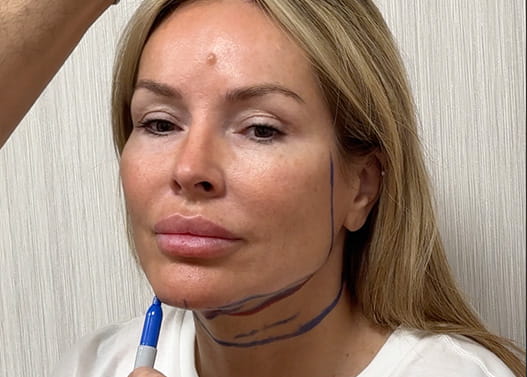
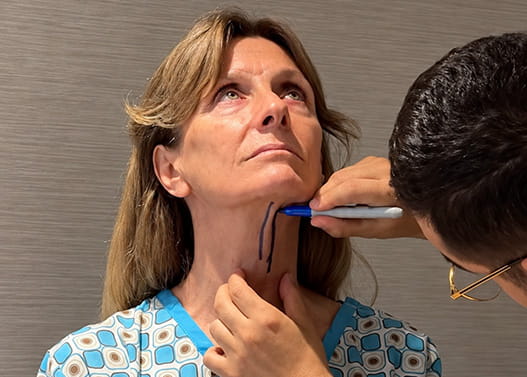
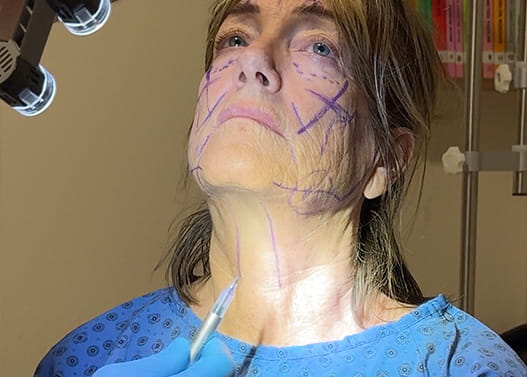
One small incision sits in the natural crease under the chin. A second runs in front of the ear, around the earlobe and into the hairline behind the ear. Both spots hide the scars in a skin crease, behind the ear and within your hair.
Fat Contouring
Through the chin incision, a fine cannula suctions fat from beneath the chin and along the jawline. Thicker pockets under the muscle can be removed directly, which is more precise than liposuction alone.
Muscle Tightening
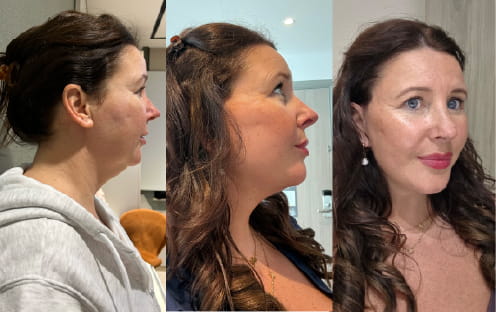
In anterior platysmaplasty, the surgeon stitches the two separated muscle edges together in the midline. In lateral platysmaplasty, the sides of the muscle are lifted and anchored higher behind the ear, which sharpens the jawline and the angle between chin and neck.
Skin Redraping and Closing
The skin is lifted up and back over the repaired muscle, and the excess is trimmed near the ear, where scars hide best. Dissolvable stitches close the deeper layers and fine sutures close the skin. A small drain may be placed to prevent fluid build-up.
Dressing and Garment
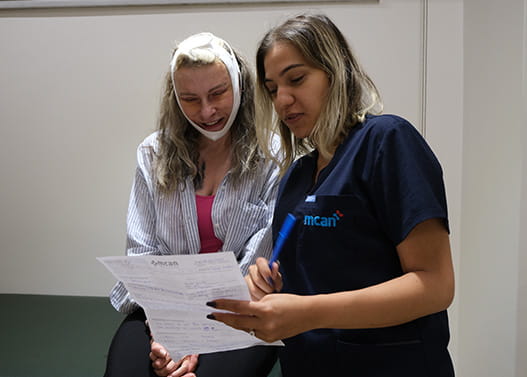
A dressing protects the area, and a compression garment supports the new contour and reduces swelling. You wear the face garment for 3 weeks unless your surgeon says otherwise.